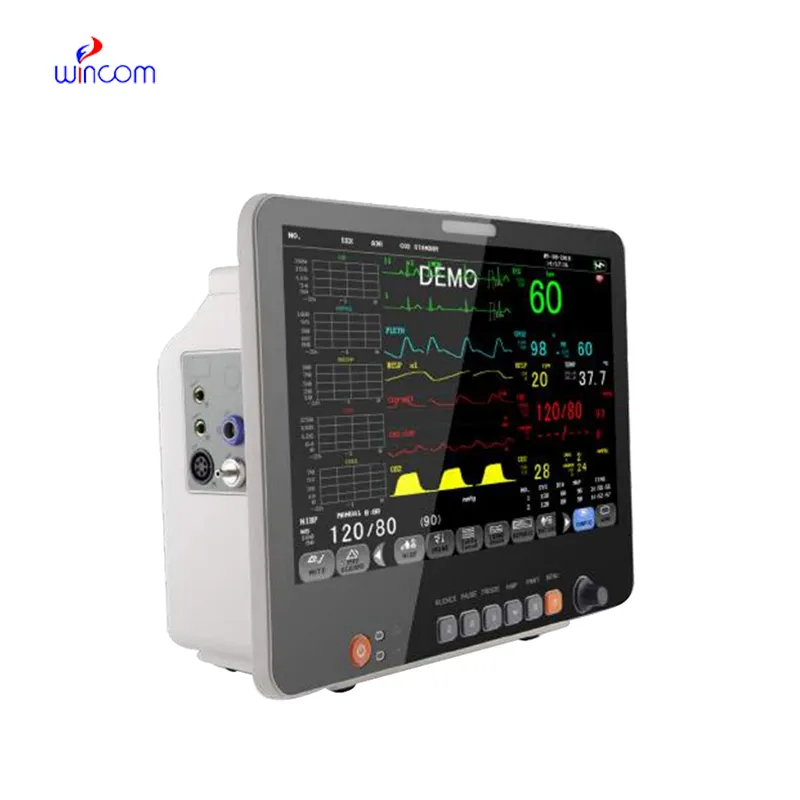
Vital Signs Monitor plays a vital role in hospitals as the primary monitoring tool that unifies ECG measurement with live display of vital signs. The device enables the clear representation of heart activity and physiological shifts. Due to its dependable operation and versatile design, it can be used in various areas of clinical practice, thereby providing uninterrupted monitoring throughout the patient's treatment and recuperation.

In neonatal and pediatric units, Vital Signs Monitor is executed to assist the continuous monitoring of at-risk patients. ECG monitoring permits the observing of fine heart activity together with vital signs. This application facilitates the uninterrupted monitoring with minimal physical disturbance thus increasing patient safety in the specialized hospital areas.
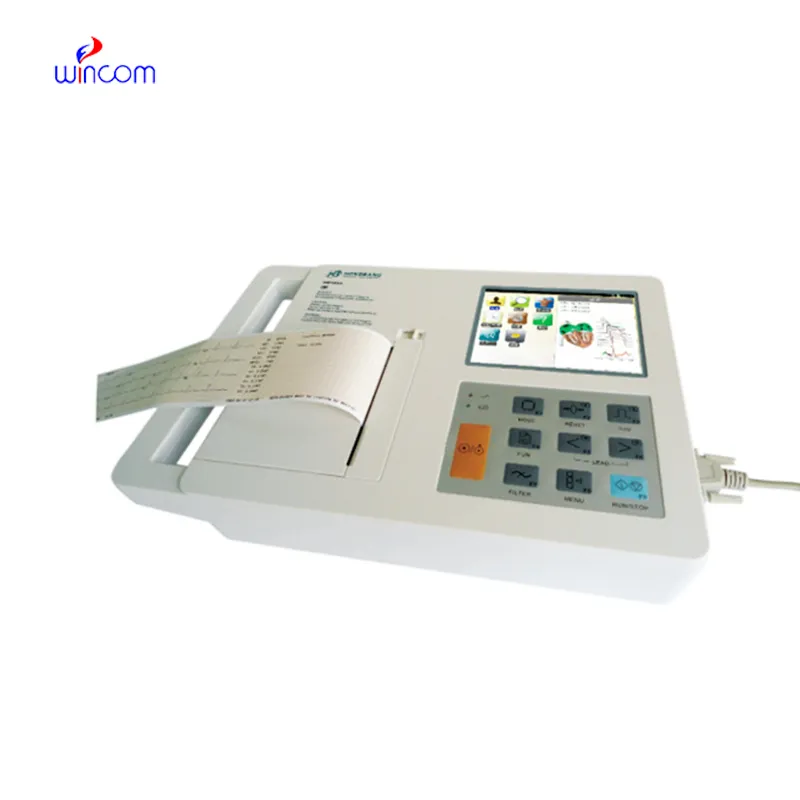
With the evolution of clinical education, Vital Signs Monitor will be a strong support to the advanced training environments. The hospitals that teach may have future systems with various simulation modes and interactive ECG visualization. This trend will not only raise the standards of medical training but also improve the interpretation skills of the healthcare workers.
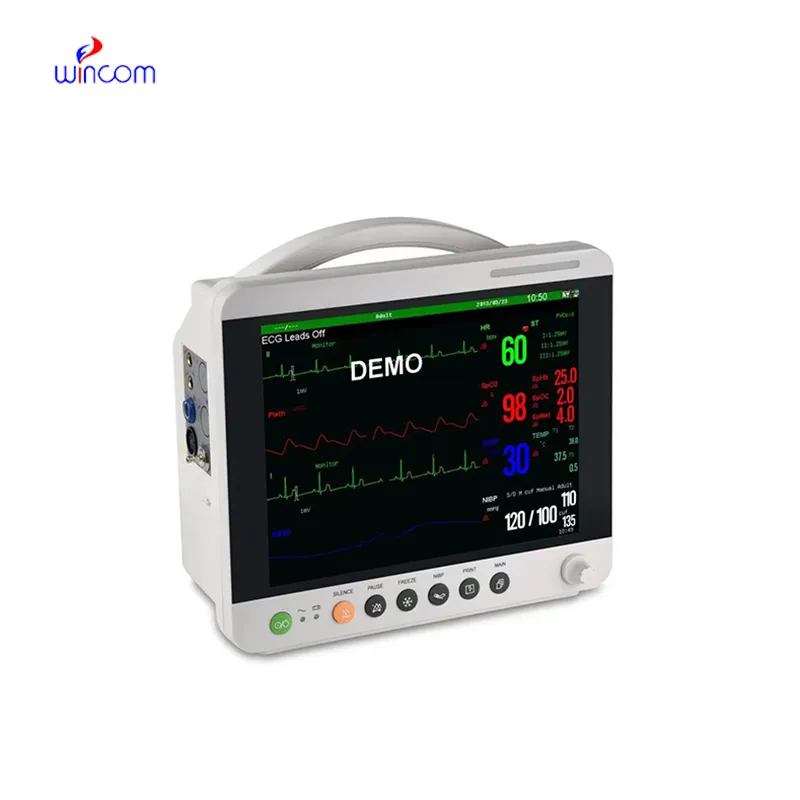
The appropriate Vital Signs Monitor handling is initially by disinfecting surfaces and display-mounts routinely with hospital-grade disinfectants. Regular checks of sensors, wires, and ECG leads for possible wear or damage should be conducted. It is necessary to keep the machinery in a controlled environment to avoid the threats of moisture, dust, or vibration. Moreover, frequent software updates will help in keeping the data processing accurate and the alarm working reliably. Adherence to systematic maintenance schedules is the way to ensure the precision of the measurement, the support of long-term functionality, and the reliability of Vital Signs Monitor as an instrument spread over hospital wards, ICUs, and clinical labs.
The medical device Vital Signs Monitor is indispensable in the intensive care unit, where continuous monitoring is the requirement. The device is capable of showing ECG signals in real-time in conjunction with the other vital signs, thereby allowing for a thorough assessment of the patient. The output of the data is very reliable enabling doctors to identify even the smallest changes in the physiology of the patient and to keep him under observation all the time during critical care. Its usage fortifies the precision of monitoring and facilitates the management of patients requiring intensive care in hospitals.
Q: What are the different kinds of signals that a Patient Monitor & ECG can identify? A: It identifies electrical cardiac signals, heart rate, arrhythmias, and often additional vital signs. Q: In what way does a Patient Monitor & ECG facilitate surgical interventions? A: It guarantees uninterrupted monitoring of the heart's activity during anesthesia and surgery. Q: Should one undergo training in order to use the Patient Monitor & ECG device? A: A very basic training course will make sure the ECG waveforms are interpreted correctly and the device is handled well. Q: Is there a possibility to connect it with hospital information systems? A: Yes, quite a number of models provide the possibility of connecting for the purpose of centralized data monitoring and analysis. Q: What is the maximum duration for which a Patient Monitor & ECG can be used without stopping? A: Generally, the manufacturers of the most devices design them to be used for the long term with the right maintenance and power management.
We’ve been using this mri machine for several months, and the image clarity is excellent. It’s reliable and easy for our team to operate.
The water bath performs consistently and maintains a stable temperature even during long experiments. It’s reliable and easy to operate.
To protect the privacy of our buyers, only public service email domains like Gmail, Yahoo, and MSN will be displayed. Additionally, only a limited portion of the inquiry content will be shown.
We’re interested in your delivery bed for our maternity department. Please send detailed specifica...
Hello, I’m interested in your centrifuge models for laboratory use. Could you please send me more ...
E-mail: [email protected]
Tel: +86-731-84176622
+86-731-84136655
Address: Rm.1507,Xinsancheng Plaza. No.58, Renmin Road(E),Changsha,Hunan,China


 EN
EN
 af
af
 es
es
 ar
ar
 tr
tr
 sw
sw
 pt
pt
 th
th
 ur
ur
 bn
bn
 ne
ne
 vi
vi
 km
km
 lo
lo
 de
de
 ru
ru
 fi
fi
 nl
nl
 fa
fa
 fr
fr
 ko
ko