In the hospital and laboratory environments, anesthesia machines provides a complete anesthesia management solution by integrating gas delivery, ventilation support, and continuous physiological monitoring. The equipment measures oxygen saturation, airway pressures, and respiratory parameters, thus enabling anesthesiologists to react promptly to the demands of the patients. A precise control of anesthetic gases is guaranteed by integrated safety alarms and adjustable flow systems. anesthesia machines finds its utility in operating rooms, emergency care units, and laboratory-based clinical studies. Its dependable performance not only secures patient stability but also increases the efficiency of the procedure and facilitates uniform monitoring across various hospital settings.

anesthesia machines is being practiced in emergency departments as a means of fast anesthesia induction during urgent surgical interventions. Trauma cases usually have unstable patients, which makes precise management of ventilation and anesthetic delivery very important. The apparatus gives the medical personnel the opportunity to rapidly adapt gas flow and airway pressure to the patient's reaction. The introduction of the device is facilitating the management of the airway securely during the period of emergency intubation and immediate operative care. By its dependable function in emergencies, anesthesia machines not only helps but also hospitals to provide anesthesia that is effective during emergencies that are critically timed.
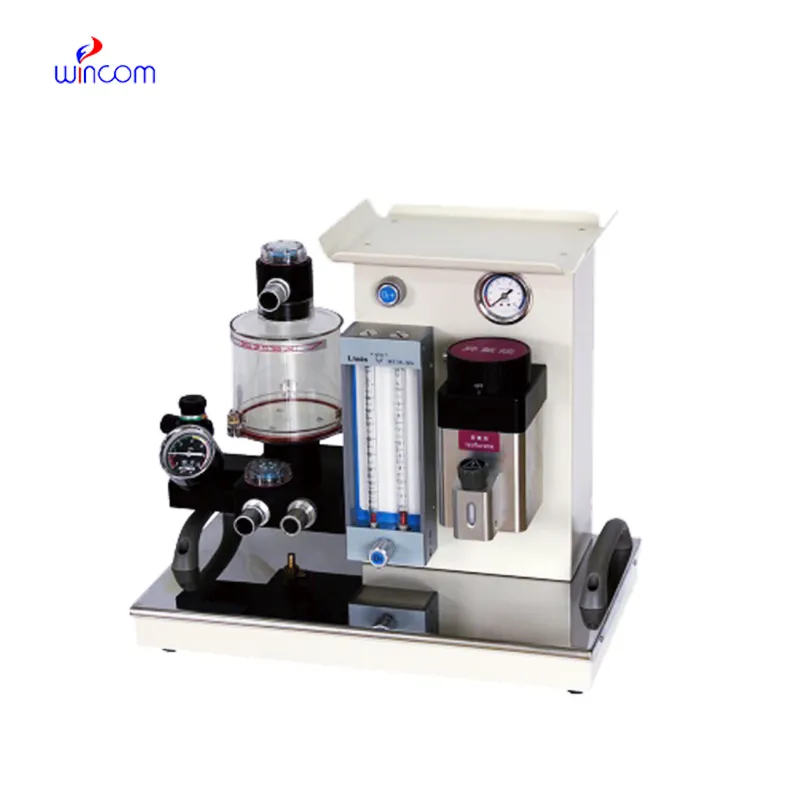
The anesthesia machines future is projected to concentrate on a better digital integration in hospital systems. The advanced connectivity will let anesthesia data to be automatically merged with electronic medical records and centralized monitoring systems. This will encourage sharing of data in real-time across operating rooms, ICUs, and laboratories. Better software interfaces might enable anesthesiologists to interpret respiration trends in a more effective manner. The smarter hospitals will lead to the anesthesia machines being a more connected device, thus enabling better patient care and the shared clinical decisions among departments.
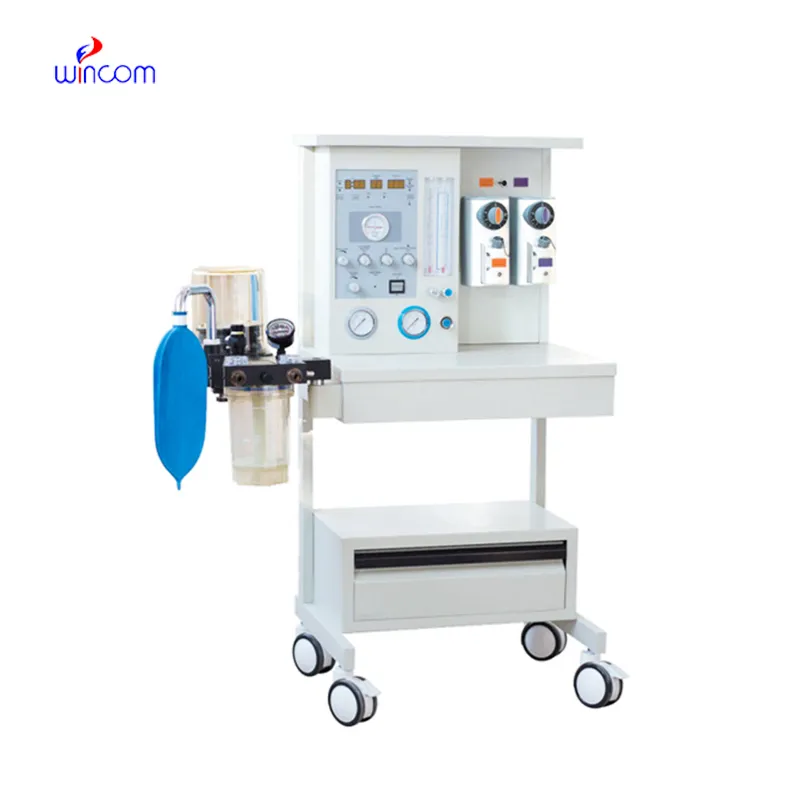
Scheduled technical maintenance is very important for the anesthesia machines functionality. Biomedical engineers often check pressure systems, valves, and air conditioning units as part of their routine work. It may also be necessary to carry out software updates to ensure that hospital monitoring networks can still work with the new software. Daily maintenance activities are documented to provide information about the condition of the equipment over time. By keeping precise service records, hospitals not only guarantee the adherence to regulations but also the reliable performance of anesthesia machines.
anesthesia machines are the key factor in anesthesia management of surgical and critical care units. It offers ventilatory support, delivery of O2, and control of anesthetic gases automatically which together make the process of sedating very reliable.surgeries. It is the device's accuracy that hospitals rely on to keep the patients in a stable condition throughout the procedure. Furthermore, the device’s built-in monitoring functions such as pressure sensors and flow meters, give anesthesiologists the power to adapt the settings based on the real-time physiological data thus making patient care and safety consistent.
Q: What is the main function of an anesthesia machine? A: Controlled anesthetic gases are delivered and the patient is ventilated during medical procedures. Q: Where is the anesthesia machine frequently used? A: Hospitals mainly use it in their operating rooms, emergency units, and intensive care departments. Q: Who operates the anesthesia machine during surgery? A: Trained anesthesiologists or anesthesia technicians are responsible for operating the device. Q: Can the anesthesia machine assist the breathing of a patient? A: Yes, by providing mechanical ventilation support when spontaneous breathing is insufficient. Q: Does the device monitor respiratory parameters? A: It monitors airflow, pressure and oxygen concentration all through the delivery.
We’ve used this centrifuge for several months now, and it has performed consistently well. The speed control and balance are excellent.
The hospital bed is well-designed and very practical. Patients find it comfortable, and nurses appreciate how simple it is to operate.
To protect the privacy of our buyers, only public service email domains like Gmail, Yahoo, and MSN will be displayed. Additionally, only a limited portion of the inquiry content will be shown.
I’d like to inquire about your x-ray machine models. Could you provide the technical datasheet, wa...
We’re interested in your delivery bed for our maternity department. Please send detailed specifica...
E-mail: [email protected]
Tel: +86-731-84176622
+86-731-84136655
Address: Rm.1507,Xinsancheng Plaza. No.58, Renmin Road(E),Changsha,Hunan,China


 EN
 af
 es
 ar
 tr
 sw
 pt
 th
 ur
 bn
 ne
 vi
 km
 lo
 de
 ru
 fi
 nl
 fa
 fr
 ko