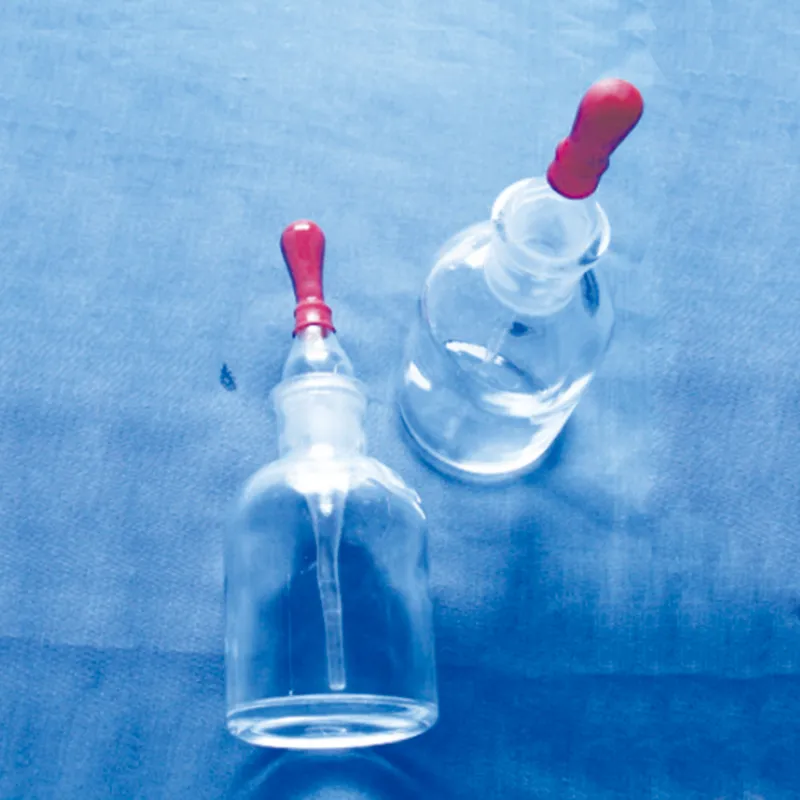
capillary tubes for blood collection are the most important parts of the process in a hospital and clinical laboratory, which are primarily used to offer safe and controlled blood collection. Each tube is capable of preserving the chemical as well as the cellular composition of the sample for accurate tests. The additives are made suitable for different types of tests like hematology, chemistry, or coagulation assays. The color-coded caps and the volume markings are very helpful for the laboratory staff to easily identify and handle the materials correctly. In the case of working with centrifuges, analyzers, and barcode systems, capillary tubes for blood collection play a major role in accelerating hospital workflows. Their trustworthy structure guarantees that blood samples are free from any contamination and can be traced, thus providing support for regular diagnostic results and smooth laboratory operations.

In hospital laboratories, capillary tubes for blood collection find widespread use in the case of routine blood tests such as complete blood counts, metabolic panels, and coagulation analysis. The prefilled additives in them guarantee the proper condition of the sample, thus, allowing the precise measurement of the plasma and cells. The laboratory personnel apply color codes to the test tubes according to the tests to be done in order to minimize the pre-analytical errors. These tubes are compatible with centrifuges, analyzers, and barcode systems, facilitating the processing of the samples automatically. By granting the same and reliable sample preservation, capillary tubes for blood collection are increasing the accuracy and efficiency of diagnostics, thus, supporting the clinicians in the management of the patients and enabling hospitals to keep the standards of laboratory workflow high.

In hospital research centers, capillary tubes for blood collection could change to be able to assist special tests that need very carefully preserved samples for high-level studies in genetics, proteomics, or metabolomics. In the future, the tubes might have stabilizers in them which make the very sensitive substances in the samples not to be degraded even during transport or storage. The automatic labeling and tracking systems will be the ones that guarantee sample traceability and laboratory standards compliance. Sample traceability and compliance with laboratory standards will be assured by automated labeling and tracking systems. The hospitals and laboratories will experience fewer pre-analytical mistakes and better reproducibility. The future capillary tubes for blood collection will be the main factor of precise, fast, and trustworthy clinical and research testing workflows through the combination of technology innovation, better chemical stabilization, and automated system compatibility.

The capillary tubes for blood collection long term care is based on constant adherence to the requirements presented by both the manufacturer and the hospital. Tubes, for their part, need to be kept in places with controlled temperatures and have to be moisture-free. Usage patterns and expiration dates are monitored with the help of inventory systems. Lab personnel should dispose of tubes that are damaged or affected in any way on an immediate basis. Adhering to disposal protocols not only keeps the environment clean but also protects the staff. By the application of thorough maintenance and care practices, the capillary tubes for blood collection persist to provide the hospitals with precise blood collection and trustworthy laboratory diagnostics across all departments.
capillary tubes for blood collection serve as the primary instruments in the laboratory of hospitals that guarantee safe and efficient blood sample collection. They are made to prevent sample degradation, and very often, depending on the tests, they come pre-filled with anticoagulants or clot activators. The tubes are color-coded and sized in a standard way to prevent confusion in identification. In hospital settings, proper use of capillary tubes for blood collection leads to precise laboratory outcomes and at the same time, cuts down the risk of contamination. These tubes are indispensable in the hands of laboratory professionals and phlebotomists during a variety of diagnostic procedures, ranging from the simple complete blood count to the complex biochemical tests, thereby making them an integral part of hospital diagnostic workflows.
Q: In what way Blood Collection Tubes act as a barrier against infections? A: The use of sterile materials for production and the one-use-only principle combined make possible the reduction of the risk of contamination. Q: Are Blood Collection Tubes only for use in research laboratories? A: Indeed, they find substantial application in clinical research and diagnostics. Q: What kind of materials are Blood Collection Tubes made of? A: Generally, the materials can be either medical-grade plastic or glass. Q: What is the procedure to dispose of Blood Collection Tubes after the usage? A: These tubes should be treated as contaminated medical waste and disposed of in accordance with the hospital's regulations. Q: What is the Importance of Blood Collection Tubes labeling? A: The proper labeling ensures the proper patient identification and accuracy of lab processing.
I’ve used several microscopes before, but this one stands out for its sturdy design and smooth magnification control.
We’ve used this centrifuge for several months now, and it has performed consistently well. The speed control and balance are excellent.
To protect the privacy of our buyers, only public service email domains like Gmail, Yahoo, and MSN will be displayed. Additionally, only a limited portion of the inquiry content will be shown.
We are planning to upgrade our imaging department and would like more information on your mri machin...
We’re looking for a reliable centrifuge for clinical testing. Can you share the technical specific...
E-mail: [email protected]
Tel: +86-731-84176622
+86-731-84136655
Address: Rm.1507,Xinsancheng Plaza. No.58, Renmin Road(E),Changsha,Hunan,China


 EN
EN
 af
af
 es
es
 ar
ar
 tr
tr
 sw
sw
 pt
pt
 th
th
 ur
ur
 bn
bn
 ne
ne
 vi
vi
 km
km
 lo
lo
 de
de
 ru
ru
 fi
fi
 nl
nl
 fa
fa
 fr
fr
 ko
ko